Central Vacuums Are a Great Choice for Many Households – Is It the Right Choice for You?
STARK’S VACUUMS IN PORTLAND OR – VANCOUVER WA – BEND OR
Key Takeaways:
- Central vacuum systems pair commercial-grade suction power with virtually silent operation in your living spaces.
- Venting dust and microscopic allergens completely outside the home provides indoor air quality and health benefits that help asthma and allergy sufferers.
- While central units excel in larger homes and permanent residences, conventional portable or stick vacuums still hold distinct advantages for quick spot-cleans and smaller rental spaces.
- Professional installers can seamlessly retrofit central vacuums into existing homes without major drywall renovation.
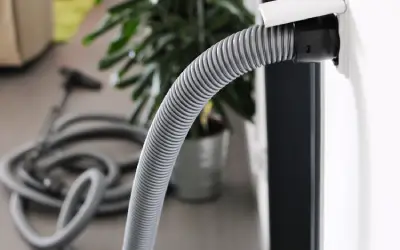 Whether you are building a new home, remodeling, or looking to upgrade your cleaning routine, central vacuum systems can offer significant advantages to many households. Beyond the obvious convenience, installing a built-in system transforms how you clean, protects your home investment, and measurably improves your indoor air quality.
At Stark’s Vacuums, serving Portland, Vancouver, and Bend, we help homeowners select and install central vacuum systems tailored to their specific floor plans and lifestyles. Here is a breakdown of why central vacuums remain one of the most effective home upgrades available.
Why Are So Many People Getting Central Vacuum Systems?
Have you been in a house recently with a central vacuum? There’s a good chance you have – they’re exploding in popularity. Central vacuums are great for:
- Health-conscious people
- Asthma and allergy sufferers
- Pet owners
- Large families with frequent messes
- Multi-story homes
- New construction homes
- Renovating homes
- Homes with mixed flooring
- Homeowners looking to add permanent built-in equity
Central vacuum systems offer many benefits compared to conventional vacuums.
1. Superior Cleaning Power
Because central vacuum power units are stationary and mounted in a garage, basement, or utility room, their motors can be significantly larger and more powerful than those found in portable vacuums. This results in higher airflow and stronger suction, allowing you to pull embedded dirt, grit, and debris out of carpets, rugs, and upholstery far more effectively.
2. Maneuverability and Flexibility
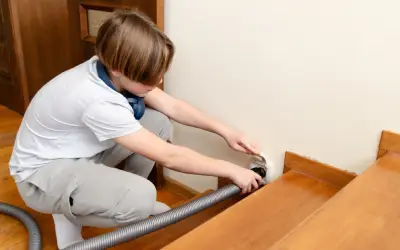 Instead of pushing or pulling a heavy 15-to-20-pound machine around furniture and up flights of stairs, you carry only a lightweight hose and attachment wand. This reduces physical strain on your back, shoulders, and wrists, making multilevel cleaning much easier.
Central vacs are also great for homes with mixed flooring as they’re available with attachment packages that make transitioning from one area to another a breeze.
3. Whisper-Quiet Operation
Traditional portable vacuums emit loud motor noise directly into the room you are cleaning. With a central vacuum, the motor noise is isolated in the garage or basement. You can vacuum without disturbing sleeping family members, interrupting phone calls, or scaring pets.
4. High-Capacity Waste Storage
Portable vacuum dust cups and bags require frequent emptying, often mid-clean. Central vacuum collection canisters hold several gallons of dirt and debris. Depending on square footage and usage, the average household only needs to empty the central receptacle two to four times a year.
5. Long-Term Durability and Home Value
Portable vacuums often need replacement every few years due to motor wear and fragile plastic casings. Central vacuum power units are built with heavy-duty materials designed to last decades. Additionally, a central vacuum is a permanently installed fixture that adds tangible resale value to your home.
>> Check out the top-quality central vacuum systems we offer made by Vacuflo and Cyclovac.
Health & Indoor Air Quality (IAQ) Benefits
Aside from convenience and power, one of the main reasons many homeowners are upgrading to a central vacuum is the health benefits.
1. Real Relief from Daily Allergy & Asthma Symptoms
When microscopic triggers like pollen, dust mite debris, and pet dander are removed entirely from your living spaces rather than kicked back up into the air, your body notices immediately. Homeowners with seasonal or pet allergies experience fewer sneezing fits, less morning congestion, and less eye irritation while relaxing at home.
2. Noticeably Fresher, Cleaner Air to Breathe
Traditional vacuums often leave behind a warm, dusty smell because dirty exhaust air is blown directly back into the room you just cleaned. Central vacuums push that exhaust out of your living areas entirely. The result is air that smells fresh and feels noticeably lighter to breathe.
3. Deeper, More Restful Sleep
Micro-allergens hiding in bedroom carpets, curtains, and mattresses are leading causes of nighttime stuffiness, mouth-breathing, and snoring. Deep-extracting these fine particles from your sleeping environment keeps your airways clear through the night, helping you sleep soundly and wake up clear-headed.
4. Protection Against Micro-Respiratory Irritants
Ultrafine particles like PM2.5 are small enough to bypass your body’s natural nasal defenses and settle deep within your lungs. Portable vacuums can leak these microscopic particles back into your environment. Central vacuums exhaust them completely outside your home, helping prevent chronic airway inflammation, persistent dry coughs, and long-term lung irritation.
5. Sneeze-Free Cleaning Sessions
Vacuums – especially if they’re older or poorly maintained – often cause immediate allergic reactions mid-clean because their exhaust vents launch settled dust, mold spores, and pet dander into the air. Because central vacuums create pure suction without localized exhaust, dormant allergens stay put until they are removed, keeping your sinuses calm while you vacuum.
-
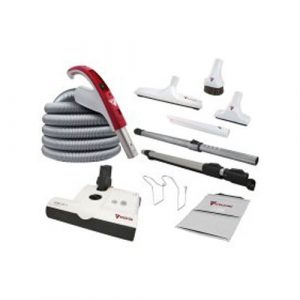
CycloVac Sebo ET-1 Kit

This electric attachment kit includes a Cyclo Vac electric hose with 3-way switch, a SEBO ET-1 electric powerhead, a 12 in. floor brush, an upholstery tool, a dusting brush, a crevice tool, a hose hanger, an attachment holder, an electric wand for the SEBO powerhead and a telescopic stainless steel wand.
The SEBO ET-1 powerhead has many convenient features that will make cleaning every corner of your home a lot easier! This floorhead is adjustable to accommodate all floor types, with an ultra-low profile design that is optimal for cleaning all surfaces and crevices. The high-quality rubber wheels will protect your floors and allow for a smooth use of your SEBO ET-1 electric powerhead.
$728.00 -
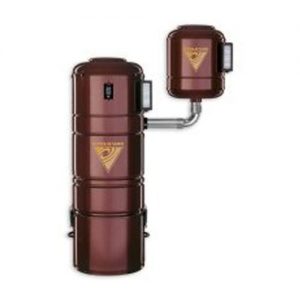
CycloVac Central Vacuum 7515
The CycloVac Central Vacuum 7515 is the ultimate in performance and versatility.
Ideal for light commercial use, the motor unit comprising the second motor can be connected to the main unit by two different intakes. The higher one allows for an installation in series, and the lower one, in parallel. It’s like having two vacuum units that give you the best possible results according to your cleaning needs! Includes a CyclofiltreTM with an antimicrobial treatment, so as to prevent the growth of mold, bacteria, and fungi that may be associated with allergies.
$1,996.00 -
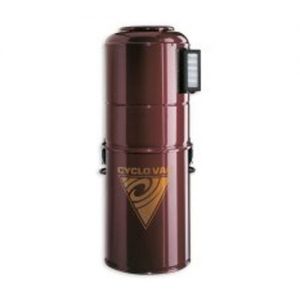
CycloVac Central Vacuum 715
The CycloVac Central Vacuum 715 has a 3-stage motor, offering high suction strength so you can vacuum every corner of your house with extra efficiency.
As an Extraperformance model, this central vacuum is designed for owners with particular needs that require superior power, such as the use of one or multiple retractable hose inlets. Includes a CyclofiltreTM with an antimicrobial treatment, so as to prevent the growth of mold, bacteria, and fungi that may be associated with allergies.
$1,065.95